Last Updated: October 23, 2026
Quick Summary
Move-in ready DFW new construction means a home that is finished, inspected, and can close now, not a quick move-in home still under construction or a lot available to build. Verify the specific address and its certificate of occupancy before you schedule a showing, since listing photos often show a model home.
- Move-in ready means finished and closable; quick move-in is under construction with a set finish window.
- Narrow the metro to two or three counties before searching for finished homes.
- Build a short list of five to eight addresses and verify each by phone the same week.
- Housing starts fell 19.7% year over year to 9,153 in the third quarter.
- Ask for a line-item breakdown and which items are allowances versus fixed.
Table of Contents
- What Move-In Ready New Construction Really Means in DFW
- How to Find Move-In Ready New Construction Homes in DFW
- Custom Home vs. Move-In-Ready Home: Which Fits Your Situation
- Your New Construction Home Buying Checklist
- Questions to Ask a Home Builder Before You Sign
- What Drives Cost in DFW New Construction (and What to Verify)
- Warranty, Inspection, and Closing Considerations
- Frequently Asked Questions
What Move-In Ready New Construction Really Means in DFW
Move-in ready DFW new construction inventory is not one thing, and that's the first trap buyers fall into.
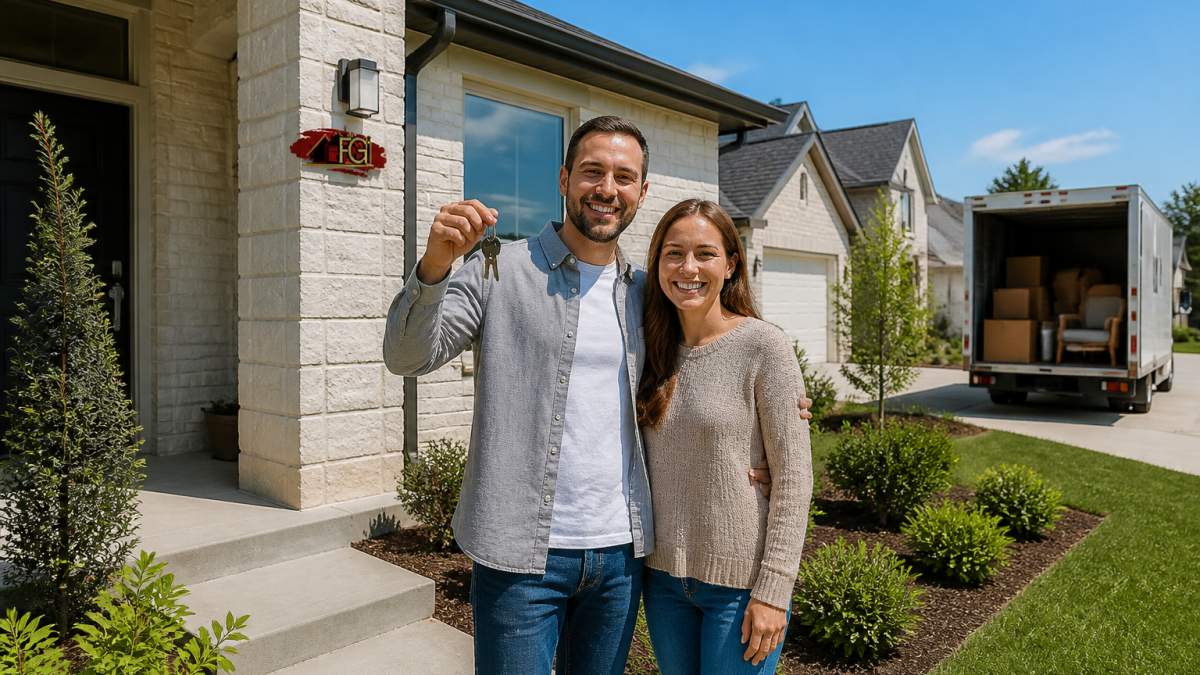
That distinction matters because DFW builders use all three labels loosely. A listing tagged "move-in ready" may still be months from a certificate of occupancy.
At FGI Homes, we build both custom homes and move-in-ready new construction, and we take on a limited number of builds at a time.
Move-In Ready vs. Quick Move-In vs. Available to Build
| Status | What It Means | What to Verify |
|---|---|---|
| Move-in ready | Finished, inspected, can close | Certificate of occupancy, final walkthrough |
| Quick move-in | Under construction, set finish window | Current build stage, permit status |
| Available to build | Lot secured, home not started | Lot premium, design timeline |
How to Find Move-In Ready New Construction Homes in DFW
Start with a verified move-in ready DFW inventory search, not a general listing portal. Builder sites and local MLS feeds both carry new construction, but neither isolates finished, immediately available homes by default. The practical fix is to narrow the metro before you narrow the house.
Narrow the Metro by County and Commute Pattern
The service area spans Kaufman, Dallas, Tarrant, Collin, Denton, Rockwall, Ellis, Johnson, Parker, and Hood counties, and the search feels very different depending on which side of the metro you land on. A common pattern is to work backward from your daily drive:
- Eastern corridor (Kaufman, Rockwall, Ellis): smaller-town feel with access to the eastern job centers; inventory tends to be a mix of established subdivisions and newer phases.
- Northern corridor (Collin, Denton): the deepest pool of new subdivisions and master-planned communities, which also means more HOA layers to read.
- Western and southern edges (Parker, Johnson, Hood): more land-oriented options and lot sizes, with longer drives to the urban core.
Pick two or three counties first, then search within them. A metro-wide portal search returns hundreds of homes you would never drive to.
Use the Right Search Mechanism
A general listing portal is built to show you the most listings, not the most finished ones. Three tighter methods:
- Filter for completion status, not just 'new construction.' Many MLS feeds carry a status field for under-construction versus completed; ask the agent or builder to confirm which field a listing is using.
- Search by subdivision name. Once you know the communities in your target counties, searching by name surfaces phases and spec homes that a keyword search buries.
- Call the builder's sales office directly and ask three things: the home's address, its current build stage, and whether it is a spec home or pre-sold.
Verify Before You Drive Out
Inventory moves weekly, and a listing can stay live after a home goes under contract. Before a showing, confirm the address, the certificate of occupancy status, and whether the home is still available. The figures you'll see quoted are metro-wide medians, not measures of ready-to-tour new builds. These numbers often cover resale and new construction together and may not reflect what is finished and available today.
Compare on Consistent Criteria
Most inventory pages show one builder's homes with one builder's framing. To compare fairly across communities, score each candidate on the same short list: county and commute, home size and layout, included features versus options, HOA obligations, completion status, and what the contract attaches as the spec sheet. That consistent scorecard is the part most listing portals leave out.
Custom Home vs. Move-In-Ready Home: Which Fits Your Situation
The choice comes down to more than time versus control. A move-in-ready home trades customization for speed. A custom build trades speed for a layout, finish package, and lot you choose yourself. But the two paths also differ in what you pay for after closing, how much uncertainty you carry during the build, and how much of the metro you can consider.
Compare the Two Paths on the Same Criteria
| Consideration | Move-In-Ready Home | Custom Home |
|---|---|---|
| What you choose | Layout and finishes already selected | Lot, plan, and finishes you select |
| When you can move | Typically at or near completion | Depends on permitting, site work, and build schedule |
| Cost drivers | Listed price, included features, HOA, taxes, insurance | Lot condition, site prep, square footage, finish level, structural options |
| Ongoing costs to check | HOA dues, taxes, insurance, utilities | Same, plus any lot-related costs such as utilities or grading |
| Flexibility after signing | Limited; changes depend on the builder | Broader, through a defined change-order process |
| Where you can build | Where finished inventory exists | On your land or land a builder helps you find |
The Cost Question Buyers Underestimate
The listed price is not the whole number. Total cost of ownership includes property taxes, HOA dues, homeowners insurance, closing costs, and likely utility expenses, and those vary by county and community.
On the custom side, cost tracks lot condition, site prep, square footage, ceiling height, finish level, and structural options. We don't quote prices or price per square foot, because a figure pulled from a marketing page rarely survives contact with an actual lot.
The Timing Question, Stated Honestly
Housing starts fell 19.7% year over year to 9,153 in the third quarter, according to HomesUSA's DFW new home report. Fewer starts means less speculative inventory coming, which is worth knowing if you're comparing a finished home against a build. A move-in-ready home is typically available sooner because the work is already done; a custom build depends on permitting, site work, and the build schedule.
The Land-Plus-Home Middle Path
Some buyers land in the middle: they own land already and want a home built on it. That's a land-plus-home package, and it's a different process from buying a spec house. The key question is who handles site evaluation and permitting, and whether the lot is build-ready before framing starts.
How to Decide
If your priority is a known layout in a specific community and you want to move sooner, finished inventory is the straighter path. If your priority is the lot, the plan, and the finishes, a custom build gives you more control in exchange for more decisions and more dependence on the schedule. Either way, compare on the same criteria and verify the specifics for the actual address or lot, not the model.
Your New Construction Home Buying Checklist
A new construction home buying checklist separates what you can see from what you're signing. Walk the house first, then read the paperwork with the same attention.
What to Check Inside the Home
- Confirm the address matches the contract, not the model
- Test every outlet, switch, faucet, and appliance
- Check windows and doors for alignment and seals
What to Check in the Contract and Paperwork
- Warranty terms, in writing, with coverage periods named
- Which items are included versus added at extra cost
- The change-order process and how costs get approved
Questions to Ask a Home Builder Before You Sign
Ask about process, not promises. The questions to ask a home builder should reveal how they handle changes, delays, and warranty claims, because those are where new-build frustration usually starts.
- Who is my direct contact from contract to closing?
- How many homes are you building at once right now?
- What's your change-order process, and how are added costs approved?
- What does your warranty cover, and for how long?
- Can I see a recently completed home and speak with that owner?
- What happens if the completion date slips?
- Who handles the final walkthrough and the punch list?
A builder who answers these plainly is telling you something. So is one who deflects.
What Drives Cost in DFW New Construction (and What to Verify)
Cost in new construction tracks a handful of variables, not a single rate. Lot condition, site prep, square footage, ceiling height, finish level, and structural options all move the number.
We don't quote prices or price per square foot, because a figure pulled from a marketing page rarely survives contact with an actual lot.
Verify incentives separately. Builder financing promotions and price reductions often carry conditions, and the terms can change.
Warranty, Inspection, and Closing Considerations
Warranty coverage is the part buyers skim and later regret. Ask for the written warranty document before signing, and read what's excluded, not just what's covered.
Our warranty is a 1-2-10 builder warranty: one year on workmanship and materials, two years on mechanical systems, and ten years on structural components. Get any builder's terms in writing and compare the coverage periods directly.
Hire your own inspector for a pre-drywall and a final inspection. A third-party inspector works for you, not the builder, and the report gives you a punch list to negotiate before closing.
Frequently Asked Questions
What does move-in-ready new construction mean?
Move-in-ready new construction means the home is finished and can be occupied shortly after closing, rather than built to your specifications over many months. In practice, the term covers a range: some homes are complete and ready to tour, while others are near completion and available soon. Because builders use the label loosely, ask for the certificate of occupancy status, which finishes are already installed, and whether any punch-list work remains. A home marketed as move-in ready in DFW can still have items scheduled after closing, so confirm the details in writing before you commit.
How is a quick move-in home different from a custom-built home?
A quick move-in home is already under construction or complete, with the floor plan, finishes, and lot chosen by the builder. A custom home is designed around your land, layout preferences, and finish selections, so the schedule depends on permitting, weather, and material lead times. The trade-off is control versus speed. If you already own land in the DFW area or want specific layouts, a custom build gives you more say. If you need to close on a set date, completed inventory typically offers a shorter path, though availability varies by community and month.
Can I customize a move-in-ready new construction home?
Sometimes, but the scope is usually limited. Paint, fixtures, landscaping, and minor finish swaps are more feasible than moving walls or changing the floor plan. Ask the builder which selections are still open and get any changes priced and documented before signing. Structural changes on a completed home are rarely practical. If customization matters to you, compare the cost of upgrades on an inventory home against building new on your own land, where you choose the layout from the start. Either way, confirm change-order pricing in writing so there are no surprises later.
What should I ask a home builder before buying new construction?
Ask what is included in the base price versus what counts as an upgrade, how change orders are priced, and what the warranty covers. Request the warranty document itself, not just a summary, and confirm the inspection process and who pays for repairs found before closing. Ask about the expected completion date and what happens if it slips. Also ask how many homes the builder is managing at once, since that affects attention during walkthroughs. Get answers in writing and have your attorney review the contract before you sign anything.
Buying new construction in DFW means sorting real inventory from marketing labels, and that takes verification at every step. If you'd rather work with one team from land or lot selection through the final walkthrough, FGI Homes limits how many builds we take on at once so each client gets direct attention, transparent communication, and a written 1-2-10 warranty. Apply for a private consultation and we'll walk through your timeline, your lot, and what's actually available.
